How to Plan a Collaboration Wall That Actually Works
Why Most Collaboration Walls Fail Over Time
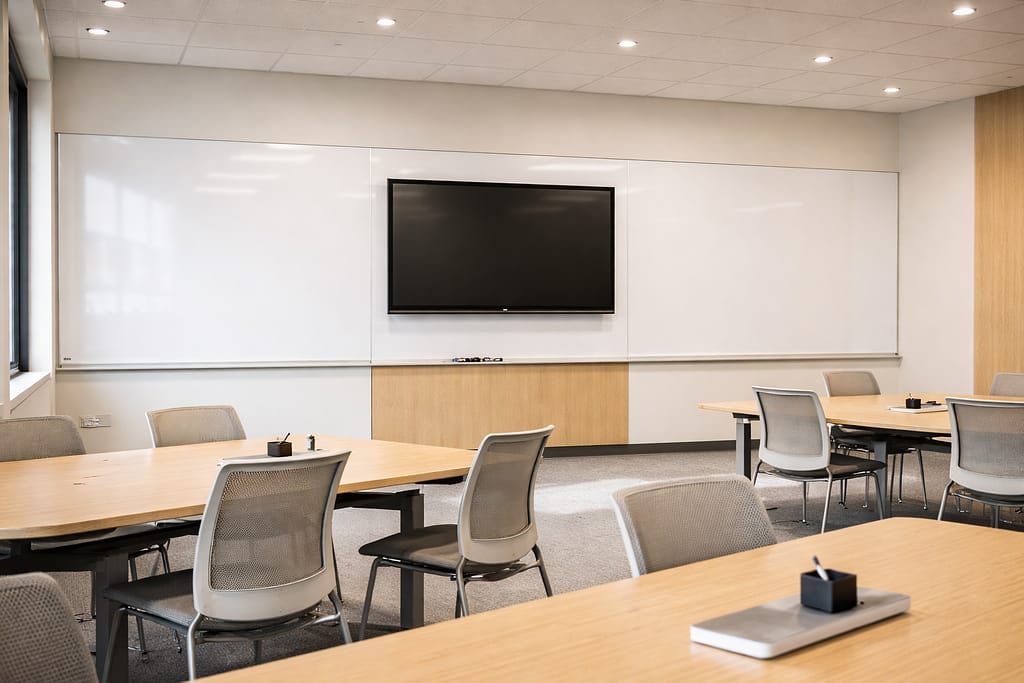
Collaboration walls have become common in classrooms, training rooms, and shared workspaces. While the concept sounds straightforward, the effectiveness of a collaboration wall depends heavily on early planning decisions.
Board size, placement, lighting, integration with technology, and joint design all influence how well the wall functions once the space is in use.
Start With How the Space Will Be Used
Before selecting a surface or size, clarify how the room will function.
Will one instructor lead from the front?
Will groups work simultaneously?
Will projection or monitors be used regularly?
A collaboration wall should reflect actual use patterns. A wall designed for presentation differs from one designed for multi-group engagement.
Size for Real Use, Not Minimum Requirements
One of the most common planning issues is underestimating how much writing area is needed.
Modern collaboration often requires multiple people writing at once. A surface that seems sufficient on a plan set can quickly feel restrictive in practice.
When in doubt, larger continuous surfaces provide greater flexibility and longer-term adaptability.
Consider Full-Wall or Floor-to-Ceiling Installations
In many modern spaces, writing surfaces extend beyond traditional framed boards.
Floor-to-ceiling whiteboards with spline joints allow for expansive writing areas while maintaining a clean architectural appearance. These systems also reduce visual breaks and maximize usable space.
Planning for these systems early ensures proper wall preparation and joint alignment.
Plan for Technology Integration
Collaboration walls often share space with digital displays. In many rooms, monitors or interactive boards are centered, with static markerboards installed on either side.
Proper planning ensures sightlines remain clear, projection is not obstructed, and writing surfaces remain usable when technology is active.
Address Lighting and Glare Early
Lighting placement and window orientation can affect writing surface visibility.
Highly reflective surfaces positioned directly opposite strong light sources may reduce readability. Early coordination between lighting design and board placement helps avoid performance issues after installation.
Think Beyond the Surface
Trim finishes, frame colors, and joint systems contribute to how the collaboration wall integrates into the architecture.
Modern environments often require more than a functional surface. They require a system that aligns with the aesthetic of the space while maintaining performance.
Plan for Longevity
A collaboration wall should remain functional even as teaching methods and technology evolve.
Sizing appropriately, selecting durable materials, and integrating flexibility into the design helps ensure the wall continues to perform long after the initial installation.
Contact Neal Slate
Have Questions or Need Guidance?
If you have questions about visual display solutions, planning considerations, or best practices for your environment, our team is here to help. With over a century of experience designing and manufacturing display solutions, Neal Slate works directly with schools, architects, builders, and facilities teams to provide clear, reliable guidance you can trust.